Research Results and
Recommendations for Download

The Youth Dialogue Event for Global Peace was held to share messages of peace from Hiroshima with audiences in Japan and abroad toward the realization of a peaceful world without nuclear weapons. Young people who had learned about nuclear disarmament, the realities of the atomic bombing, and the role Hiroshima should play engaged in dialogue with leaders at the forefront of the international community, including senior United Nations officials.
Event Overview
Organizers
Hiroshima Prefecture
Hiroshima Organization for Peace Creation (HOPe)
United Nations Institute for Training and Research (UNITAR)
Date and Time
Thursday, August 6th, 2026, 3:00PM – 4:30PM
Venue
Edion Peace Wing Hiroshima, 2nd Floor Lounge B
* The event was also livestreamed online.
Theme
From Hiroshima’s Youth to the World: Nuclear Deterrence and Peace
Speakers
【Youth】
- 11 participants from the UNITAR Hiroshima Youth Ambassador Program*
【Panelists】
- Izumi Nakamitsu, United Nations Under-Secretary-General and High Representative for Military Affairs
- Kazuko Hikawa, Deputy Director and Professor, Research Center for Nuclear Weapons Abolition (RECNA), Nagasaki University
- H.E. Kemueli Naiqama, Ambassador Extraordinary and Plenipotentiary of the Republic of Fiji to Japan
- Mika Yokota, Governor of Hiroshima Prefecture and President of HOPe
【Facilitator】
- Mihoko Kumamoto, Director of the Bureau for Sustainable Prosperity, UNITAR
*UNITAR Hiroshima Youth Ambassador Program:
The UNITAR Hiroshima Office recruits young people aged 18–29 residing in Hiroshima Prefecture. From April through August, the program conducts training aimed at developing leaders capable of thriving on the international stage. Participants reflect on what message should be conveyed from Hiroshima, the “City of Peace,” and cultivate the ability to take concrete actions toward realizing a world without conflict.
Number of Participants (in-person + cumulative online viewers)
379
Presentations by Youth Participants
Based on the question, “Why do nuclear weapons continue to exist and even continue to be developed despite the grave humanitarian and environmental harm they cause?”, the Youth Ambassadors gave presentations on the following two themes and exchanged views with experts and others.
○ Theme 1: “Peace Education and Civic Engagement”
Exploring ways to incorporate stories of nuclear harm from around the world into peace education globally, as well as the challenges facing peace education as the number of atomic bomb survivors declines and measures to support young people.
○ Theme 2: “Policymaking and the Role of the United Nations (Nuclear-Weapon-Free Zones)”
With nuclear disarmament currently at a standstill, considering, under the NPT framework and drawing on examples from Africa, what can be done to reduce reliance on nuclear deterrence, particularly in Northeast Asia.
Comments from the Panelists
(1) Izumi Nakamitsu, United Nations Under-Secretary-General and High Representative for Military Affairs
○ At the NPT Review Conference, progress had been made toward consensus on concrete measures to advance nuclear disarmament, including strengthening the accountability of nuclear-weapon states, reducing nuclear risks, and promoting dialogue on strategic stability. Although a final document was not adopted, ideas on which agreement is possible already exist. The role of the United Nations is to persistently advance these ideas by taking them up in other forums, such as the UN General Assembly, and through direct and indirect diplomatic engagement with countries.
○ To change the world, it is important to: (1) acquire knowledge and wisdom; (2) question what is taken for granted and continue asking questions; and (3) think about humanity, solidarity, justice, and fairness. The history of nuclear weapons should be understood not only through Hiroshima and Nagasaki, but as a global history connected to nuclear testing around the world, colonialism, and imperialism, and young people should reflect on questions of fairness. Even amid a difficult international environment, they should not lose hope: if young people themselves want to change the world and take action, they can change it.
(2) Kazuko Hikawa, Deputy Director and Professor, RECNA
○ Northeast Asia includes nuclear-weapon states, and establishing a nuclear-weapon-free zone will be difficult unless those countries relinquish their nuclear weapons. Because political environments and preconditions differ by region, it is necessary to move beyond past frameworks and consider, from new perspectives, a nuclear-weapon-free-zone mechanism suited to Northeast Asia.
○ As illustrated by South Africa, which relinquished its nuclear weapons on the grounds that doing so would serve its national interests, another important perspective in considering the feasibility of a nuclear-weapon-free zone is how to create conditions in which such a step would be in the interests of each country.
(3) H.E. Mr. Kemueli Naiqama, Ambassador Extraordinary and Plenipotentiary of the Republic of Fiji to Japan
○ The human impact of nuclear weapons is by no means a thing of the past. In Hiroshima, memories continue to be passed down through atomic bomb survivors and local communities. Likewise, the experiences of Pacific Island countries, which have suffered profound and long-lasting impacts from numerous nuclear tests, including the forced displacement of people from their homes, must also be passed on.
○ While Hiroshima and Nagasaki have become global symbols for communicating the harm caused by nuclear weapons, the experiences of nuclear testing and its consequences in the Pacific have not been sufficiently addressed in global discussions or peace education.
○ The experiences of Pacific Island countries should also be positioned as an important part of the history that conveys the humanitarian impact of nuclear weapons. The “Pacific story” should always be told together with the “Hiroshima story” and incorporated into peace education around the world.
(4) Mika Yokota, Governor of Hiroshima Prefecture
○ A major challenge for peace education is that, as atomic bomb survivors grow older, opportunities to hear directly about their experiences are disappearing. Systems are needed to pass on their voices and thoughts to future generations, including through the use of AI, VR, and other technologies.
○ The experiences of Hiroshima and Nagasaki are connected to those of regions affected by nuclear testing and should be shared by the world as a whole.
○ There is a significant gap between Hiroshima and other regions in opportunities to encounter information about the realities of the atomic bombing and nuclear weapons, and this gap needs to be narrowed. Hiroshima Prefecture will work to create opportunities for young people to learn and interact, while also providing spaces that enable participating youth to share their experiences and learning with those around them and translate them into action.
Scenes from the Event
Photos
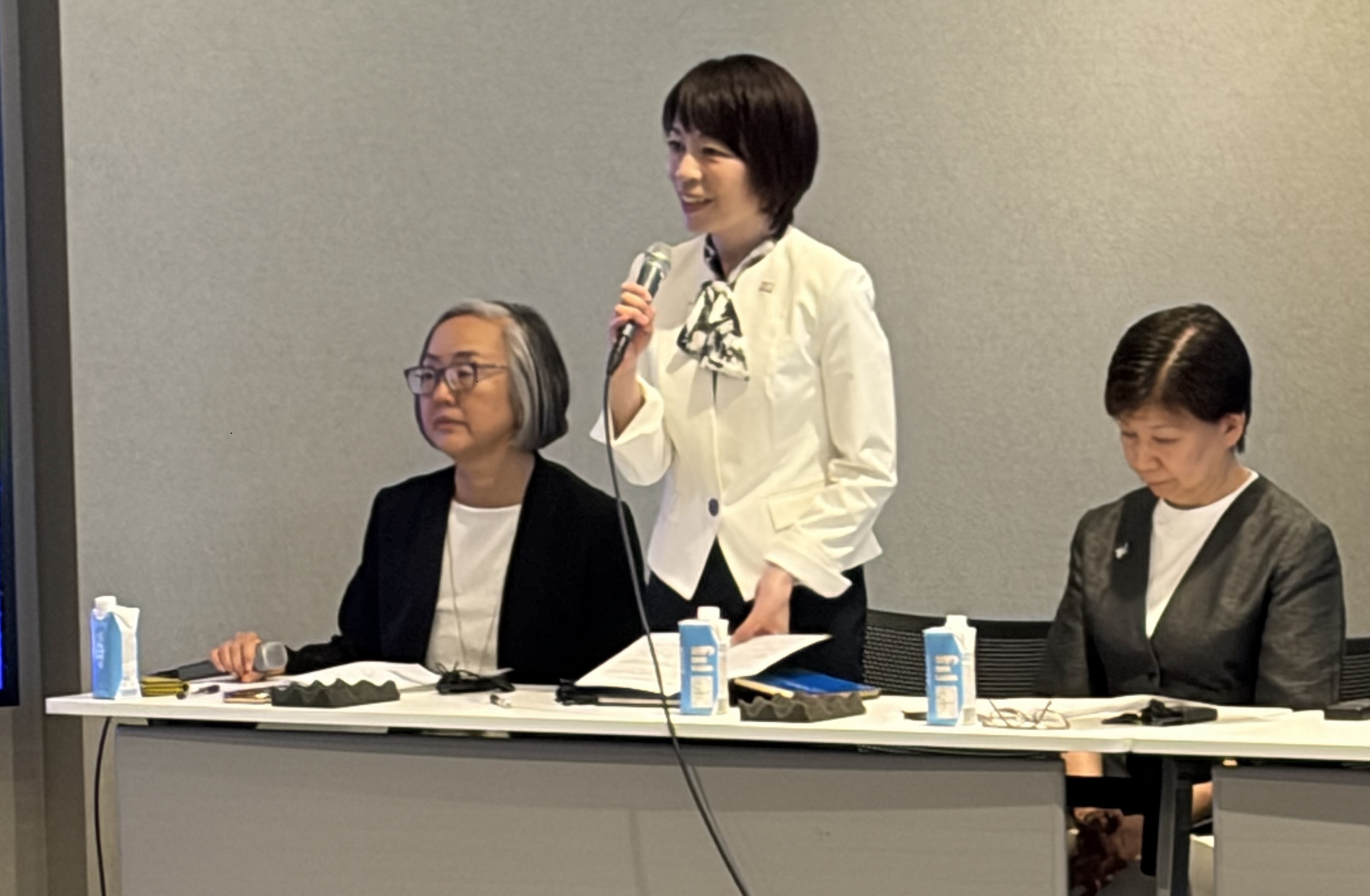
Remarks by the Governor
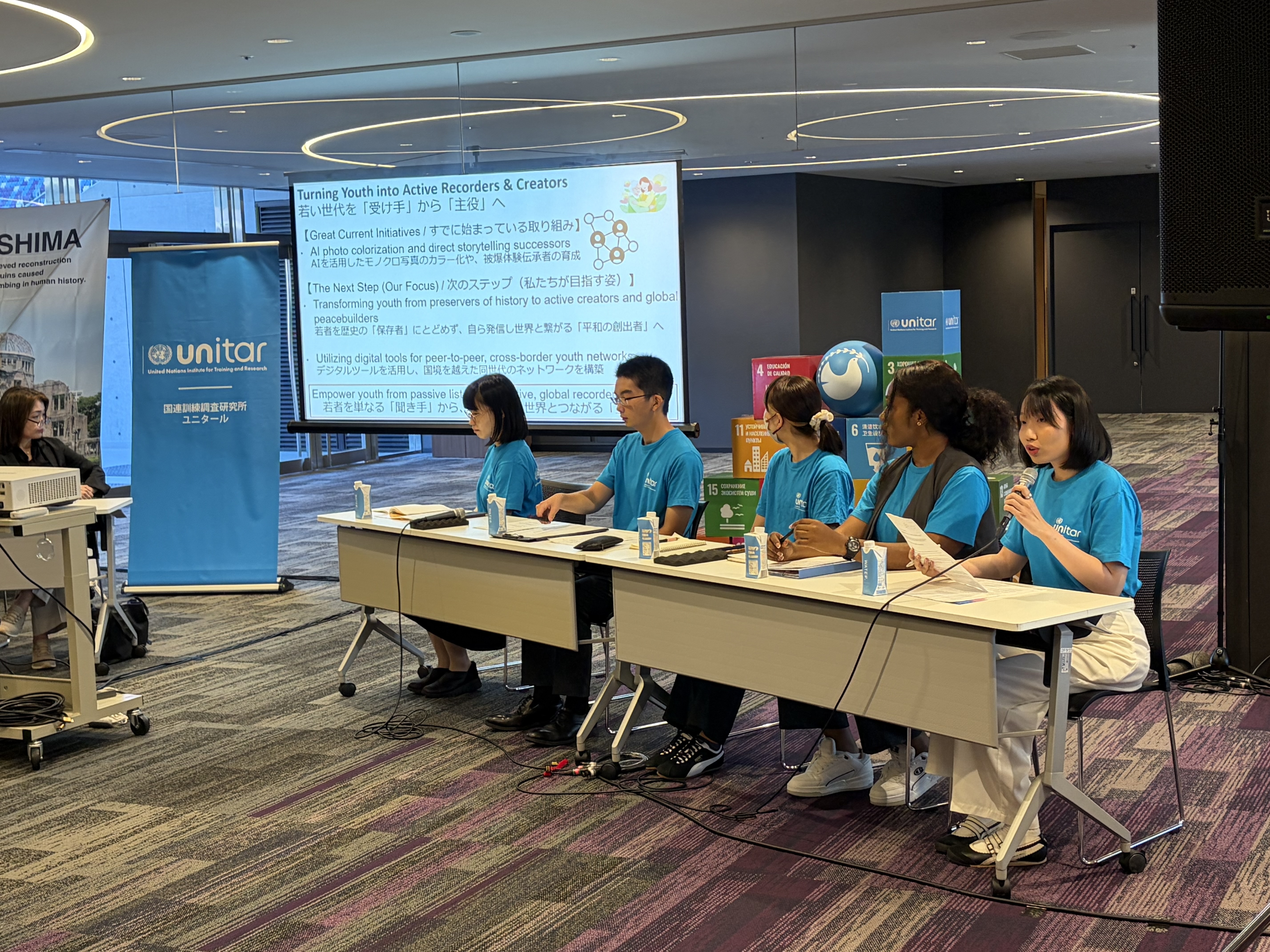 Presentation by Youth Participants
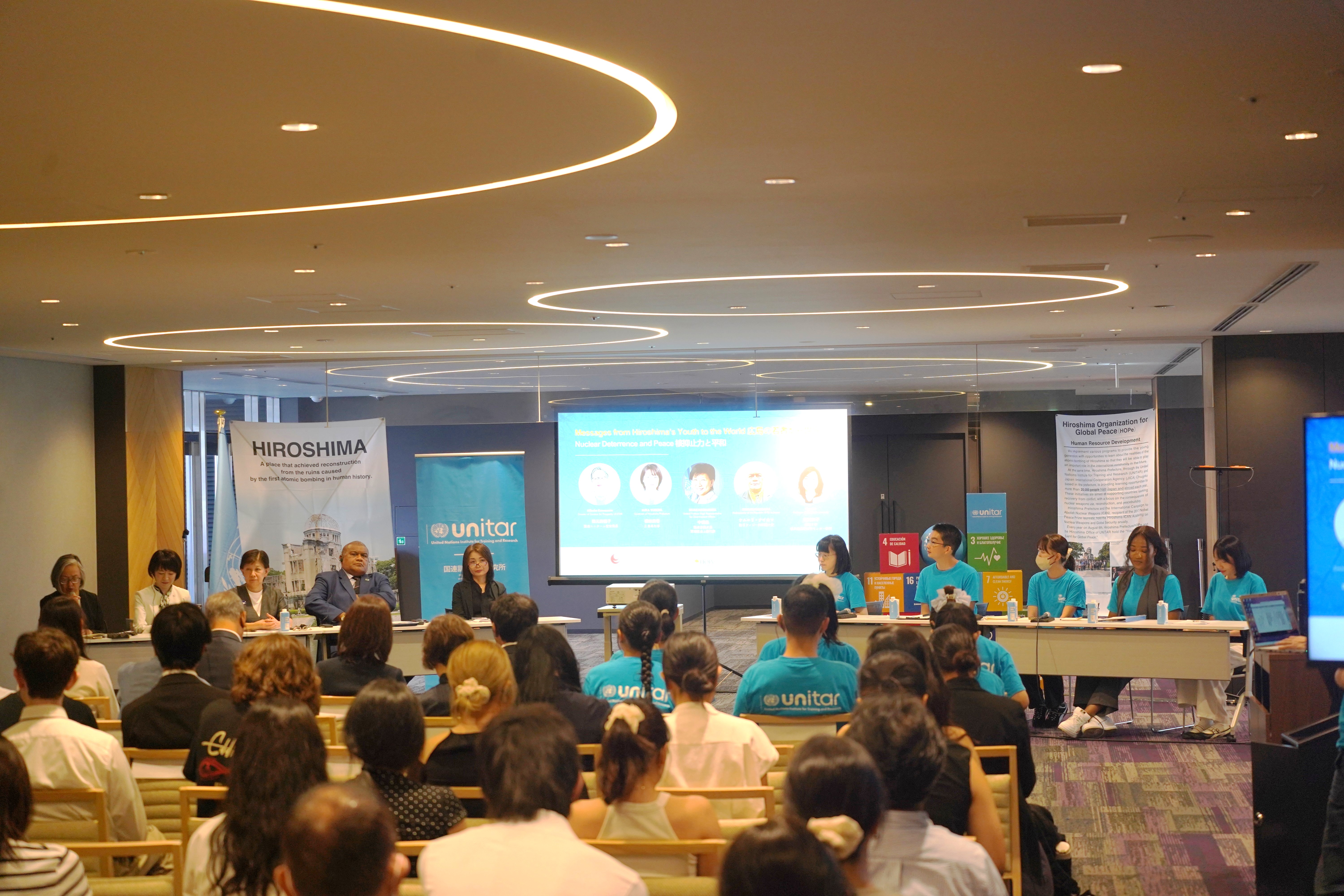 Dialogue between Youth Participants and Panelists
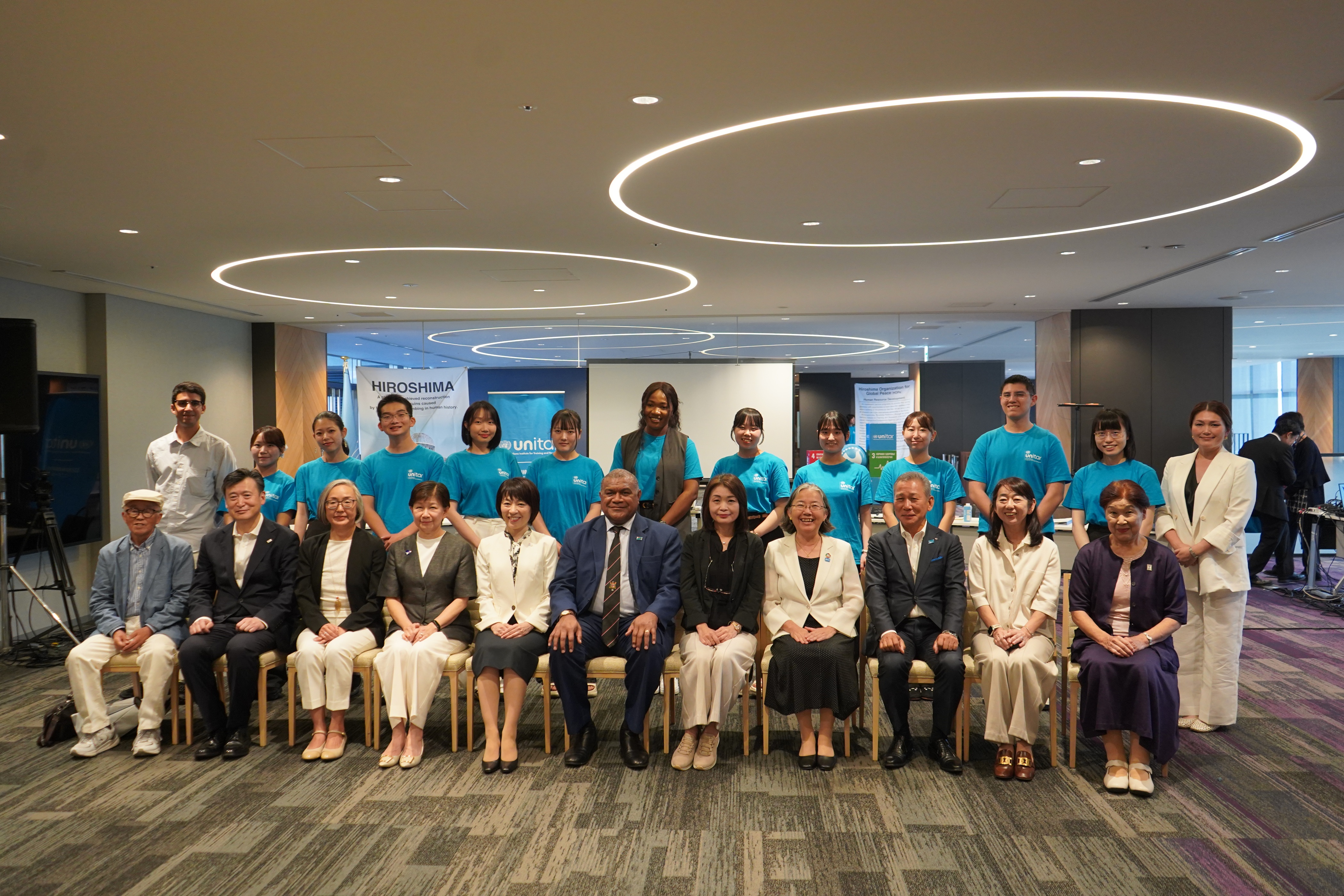 Group Photo
Videos (available on YouTube)
• Japanese: https://www.youtube.com/watch?v=vr8ErsSUxRQ&t=16s
• English: https://www.youtube.com/watch?v=TDRMoAQhhRA&t=1647s